Fundamentals Videos
Browse videos in the Fundamentals category.
Safety & Infection Control: Official NCLEX Test Plan Breakdown
Master the Safety & Infection Control category using the official NCLEX test plan. This video covers the core testable concepts—hand hygiene, standard precautions, aseptic technique, isolation protocols, and environmental safety—that make up 10-16% of your exam. Includes sample questions and clinical judgment application strategies to help you study strategically and boost your score.
APGAR Score Made Simple
If you’re preparing for the NCLEX, the APGAR score is a must-know topic. It’s one of the most frequently tested newborn assessments on the exam — but more importantly, it’s a tool that could make all the difference in those first critical minutes of life as a nurse. In this video, we’ll break down the APGAR score step by step so you can walk into the NCLEX feeling confident and be ready to apply it at the bedside. What You’ll Learn in This Video: ✅ The purpose of the APGAR score and why it’s so important ✅ When to assess: 1 minute and 5 minutes after birth (and beyond if needed) ✅ The meaning behind each letter in A-P-G-A-R A – Appearance (skin color) P – Pulse (heart rate) G – Grimace (reflex irritability) A – Activity (muscle tone) R – Respiration (breathing effort & cry) ✅ How to score each category (0, 1, or 2 points) ✅ Common NCLEX “trick” questions (like acrocyanosis) ✅ Two full NCLEX-style practice scenarios with scoring walkthroughs ✅ Critical safety points: when to act immediately, limits of the APGAR, and what a score really means ✅ What to do next based on the score: 7–10 → Routine care 4–6 → Provide support and close monitoring 0–3 → Emergency resuscitation We’ll also highlight a powerful truth: the APGAR score isn’t just a number. It’s a language of patient safety and advocacy — a way to quickly communicate a newborn’s condition and ensure they get the care they need right now. 🎯 NCLEX Tip: Always remember, if the newborn isn’t breathing, you don’t wait for the one-minute score — you act immediately.

Blood Transfusions: Compatibility, Administration & Reaction Management
A focused review of blood transfusion nursing care, covering blood type compatibility, pre-transfusion verification, infusion time limits, IV fluid compatibility, and how to recognize and respond to febrile, allergic, and hemolytic reactions, as well as TACO and TRALI. Includes step-by-step priority actions for managing a suspected transfusion reaction.

GI System NCLEX Review: Pancreatitis, SBO, TPN, Labs & Prioritization
This GI NCLEX review covers high-yield gastrointestinal nursing topics, including TPN safety, acute pancreatitis, small bowel obstruction, GI medications, potassium imbalances, and prioritization/delegation strategies. You’ll review key NCLEX clues such as LUQ pain radiating to the back in pancreatitis, Cullen’s sign, Turner’s sign, NPO status, NG tube decompression, SBO vs LBO symptoms, and when to prioritize unexpected complications in GI patients. The lesson also reinforces the “EAT” delegation rule: do not delegate evaluation, assessment, or teaching.
Electrolyte Management & NCLEX Mastery: Potassium, Sodium, Calcium, Magnesium & Phosphate
Comprehensive electrolyte review covering critical nursing interventions and NCLEX strategies. Learn the priority management of hyperkalemia (stabilize, shift, shed), essential potassium safety rules, sodium's effects on neurological function, and the calcium-phosphate relationship in kidney disease. Includes ECG interpretation for electrolyte imbalances, SIADH vs DI comparison, and evidence-based practice scenarios. Essential for NCLEX success and clinical competence.

Electrolyte Imbalances & Fluid Shifts: NCLEX Priority Actions
A focused review of the five core electrolytes (sodium, potassium, calcium, magnesium, chloride) with normal ranges, ECG changes, and priority nursing interventions. Includes high-yield mnemonics (SALT LOSS, MURDER, CATS, BACME), a breakdown of isotonic, hypotonic, and hypertonic IV fluids, and key NCLEX traps covering lithium toxicity, IV potassium safety rules, and magnesium toxicity reversal with calcium gluconate. Ends with a Next Gen NCLEX clinical judgment scenario.

Fluids & Electrolytes: 3-Step NCLEX Framework
Learn a reliable 3-step system for tackling any fluids and electrolytes question on the NCLEX. This comprehensive review covers fluid assessment, critical electrolyte analysis (sodium and potassium), ABG interpretation using the ROAM mnemonic, and priority nursing actions. Includes the FRIED SALT and MURDER mnemonics, plus essential safety points about IV potassium administration and cardiac monitoring. Master the homeostasis seesaw concept and understand when to use isotonic, hypotonic, and hypertonic solutions.

Opioid Pharmacology: High-Yield NCLEX Review
Essential opioid nursing review covering the "low and slow" rule, respiratory depression management, naloxone administration, PCA pump safety, and fentanyl patch teaching. Includes critical threshold values, priority nursing actions, and an NCLEX-style practice scenario. Perfect for quick review before your exam.

Glasgow Coma Scale (GCS): Scoring, Assessment & NCLEX Traps
A complete walkthrough of the Glasgow Coma Scale covering all three components (Eye, Verbal, Motor), how to perform the assessment from least to most invasive, and the clinical thresholds you need to know. Includes memory tricks like EVM 4-5-6, key rules such as "less than 8, intubate" and documenting non-testable components as NT, plus a breakdown of the Pediatric GCS and when a score drop signals a neurological emergency. Ends with a practice question calculating and classifying a GCS of 12.

NCLEX EKG Masterclass: 6-Step Analysis, AFib/AFlutter, VTach/VFib, & Priority Actions
A focused EKG walkthrough for exam day. Start with Normal Sinus Rhythm and the 5 criteria you must know, then apply a repeatable 6-step analysis to any strip. Compare atrial rhythms (AFib, AFlutter) to lethal ventricular rhythms (VTach, VFib) and lock in priority interventions—including cardioversion vs defibrillation and ACLS meds (epinephrine, amiodarone, atropine). Includes NCLEX-style “what do you do first?” prompts and quick-reference takeaways.

Pediatric NCLEX Review: Prioritization, Emergencies, Milestones & Med Safety
This pediatric NCLEX review covers the key concepts nursing students need to recognize high-priority pediatric patients and answer safety-based exam questions. Topics include NCLEX prioritization rules, pediatric vital sign trends, developmental milestones and regression, croup vs. epiglottitis, signs of abuse and neglect, mandated reporting, and high-yield pediatric pharmacology. Students will review essential medication safety points including kilogram-based dosing, ibuprofen and aspirin precautions, IM injection site selection, digoxin toxicity signs, amoxicillin teaching, and pancreatic enzyme administration for cystic fibrosis.
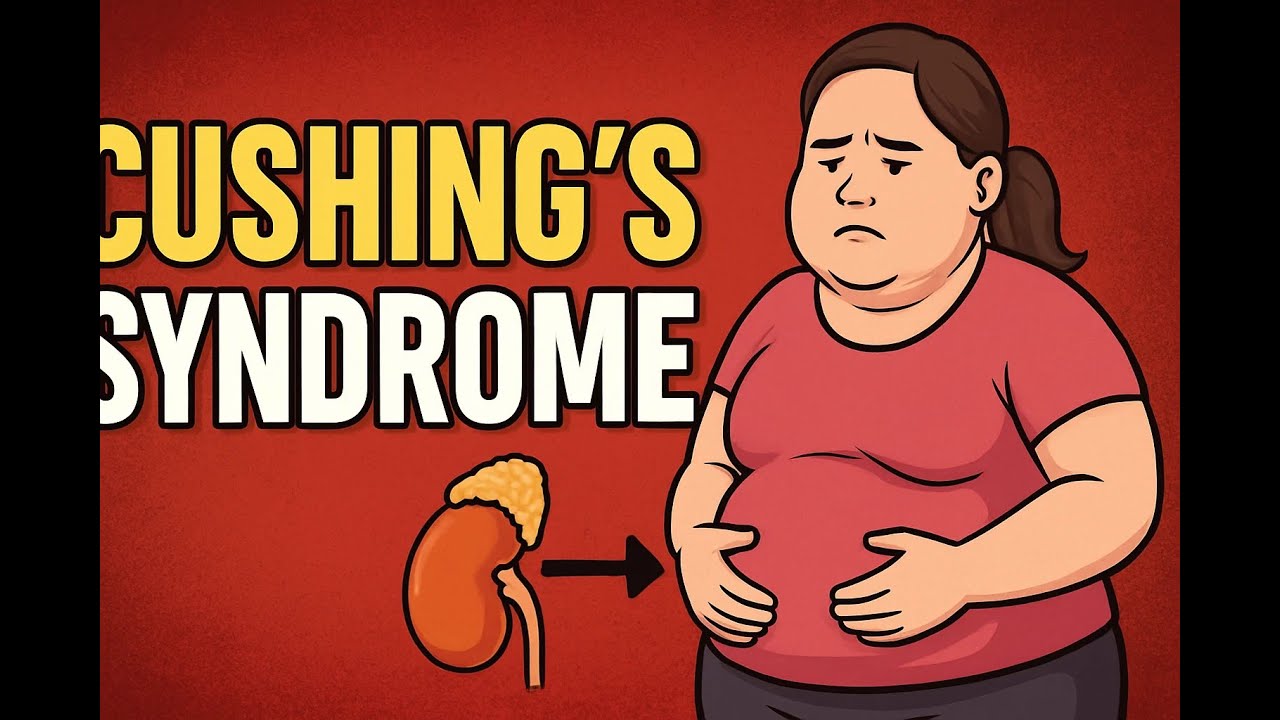
Cushing's Syndrome Explained
Understanding Cushing's Syndrome: Hypercortisolism Uncovered! In this comprehensive explainer video, we dive deep into Cushing's Syndrome, an endocrine disorder characterized by the hypersecretion of adrenocortical hormones, primarily cortisol, leading to elevated cortisol levels in the body. Also known as hypercortisolism or adrenal hyperfunction, this condition is often seen as the opposite of Addison's Disease. It's a serious condition that can be life-threatening if left untreated. What Causes Cushing's Syndrome? Learn about the primary factors that lead to this disorder: Adrenal or Pituitary Tumors: These can cause the body to produce too much cortisol. Specifically, a pituitary tumor can lead to Cushing's Disease by producing too much ACTH, which then stimulates the adrenal cortex to release excess cortisol. Overuse or Chronic Use of Corticosteroid Medications: Long-term use of these drugs is a common external cause of Cushing's Syndrome. Spotting the "STRESSED" Symptoms: Cushing's Syndrome affects multiple body systems due to the excess of glucocorticoids (cortisol), mineralocorticoids (aldosterone), and androgens. We break down the key signs and symptoms using the memorable "STRESSED" mnemonic: Skin is fragile, prone to tearing or breaking down, often with prominent purplish Striae (stretch marks) on the abdomen, thighs, and breasts. Patients may also experience peripheral edema. Truncal obesity, where fat accumulates primarily around the trunk, often accompanied by thinner arms and legs due to reduced muscle mass. Rounded face, commonly referred to as "Moon Face," characterized by puffy cheeks and fat build-up. Reproductive issues like amenorrhea in women and erectile dysfunction (ED) in men can also occur. Elevated blood pressure (Hypertension) and signs of heart failure (CHF) due to the body retaining too much sodium and water from excess aldosterone. This fluid retention can make a patient appear "like a cushion". Sugar is extremely high (Hyperglycemia), as cortisol increases glucose levels, putting patients at risk for insulin resistance and diabetes. Excessive body hair (hirsutism) on the face, arms, and back, especially in women, due to excess androgens. Electrolyte imbalances are common, including Hypokalemia, Hypocalcemia (which increases the risk for Osteoporosis and brittle bones), and Hypernatremia. Dorsocervical fat pad, known as a "Buffalo Hump," a collection of fat on the back of the neck and upper back. Patients may also experience Depression, emotional lability, irritability, and even psychosis. Other common manifestations include muscle weakness and fatigue, peptic ulcers, and a decreased immune response, making patients highly susceptible to infections. Diagnosis & Therapeutic Management: Discover how Cushing's Syndrome is diagnosed through tests like the dexamethasone suppression test, 24-hour urinary free cortisol (UFC), and imaging studies (CT, MRI, ultrasound) to locate tumors. Therapeutic management focuses on removing the source of the problem, which may involve surgical removal of adrenal or pituitary tumors (adrenalectomy, transsphenoidal hypophysectomy) or decreasing/stopping corticosteroid use if it's the cause. Medication like ketoconazole may be used to inhibit cortisol synthesis. Key Nursing Care & Patient Education: Nurses play a critical role in managing patients with Cushing's Syndrome throughout their journey. This video highlights crucial nursing concepts and interventions, including: Fluid & Electrolyte Management: Monitoring and replacing electrolytes as needed, with a focus on controlling hypertension and monitoring cardiovascular status (EKG, BP). This includes restricting fluid and sodium, and encouraging increased intake of potassium, calcium, and protein. Safety Measures: Protecting patients from injury due to osteoporosis and fragile skin by providing a protective environment and meticulous skin care. Infection Control: Implementing strict infection precautions and meticulous wound care due to the patient's decreased immune response. Nutritional Guidance: Encouraging a healthy diet that is low in sugar and salt, high in fiber and protein, and provides adequate calcium and Vitamin D. Staying hydrated is also key. Comfort & Coping: Helping patients cope with significant changes in physical appearance, weight gain, edema, and emotional instability. Patient Education: Emphasizing proper steroid dosing (if applicable), monitoring blood sugar and signs of infection, the importance of ongoing medical follow-up, and wearing a medical alert bracelet.