Medical-Surgical Nursing Videos
Browse videos in the Medical-Surgical Nursing category.
Safety & Infection Control: Official NCLEX Test Plan Breakdown
Master the Safety & Infection Control category using the official NCLEX test plan. This video covers the core testable concepts—hand hygiene, standard precautions, aseptic technique, isolation protocols, and environmental safety—that make up 10-16% of your exam. Includes sample questions and clinical judgment application strategies to help you study strategically and boost your score.

GI System NCLEX Review: Pancreatitis, SBO, TPN, Labs & Prioritization
This GI NCLEX review covers high-yield gastrointestinal nursing topics, including TPN safety, acute pancreatitis, small bowel obstruction, GI medications, potassium imbalances, and prioritization/delegation strategies. You’ll review key NCLEX clues such as LUQ pain radiating to the back in pancreatitis, Cullen’s sign, Turner’s sign, NPO status, NG tube decompression, SBO vs LBO symptoms, and when to prioritize unexpected complications in GI patients. The lesson also reinforces the “EAT” delegation rule: do not delegate evaluation, assessment, or teaching.

Blood Transfusions: Compatibility, Administration & Reaction Management
A focused review of blood transfusion nursing care, covering blood type compatibility, pre-transfusion verification, infusion time limits, IV fluid compatibility, and how to recognize and respond to febrile, allergic, and hemolytic reactions, as well as TACO and TRALI. Includes step-by-step priority actions for managing a suspected transfusion reaction.
Acute Kidney Injury (AKI): Complete NCLEX Review
Comprehensive review of acute kidney injury covering prerenal, intrarenal, and postrenal causes, oliguric vs diuretic phases, critical lab value interpretation, and priority nursing interventions. Focuses on life-threatening complications including hyperkalemia management and metabolic acidosis recognition. Essential for NCLEX preparation and med-surg success.

Electrolyte Imbalances & Fluid Shifts: NCLEX Priority Actions
A focused review of the five core electrolytes (sodium, potassium, calcium, magnesium, chloride) with normal ranges, ECG changes, and priority nursing interventions. Includes high-yield mnemonics (SALT LOSS, MURDER, CATS, BACME), a breakdown of isotonic, hypotonic, and hypertonic IV fluids, and key NCLEX traps covering lithium toxicity, IV potassium safety rules, and magnesium toxicity reversal with calcium gluconate. Ends with a Next Gen NCLEX clinical judgment scenario.

Hypophysectomy Pre and Post-Operative Nursing Care
Comprehensive review of nursing care for patients undergoing hypophysectomy via transphenoidal approach. Covers pre-operative teaching, critical post-op assessments, recognition of major complications (CSF leak, DI, SIADH), and discharge education. Includes NCLEX-style practice questions and clinical decision-making strategies for safe patient management

Diverticulitis: NCLEX Review
A comprehensive review of diverticulitis for NCLEX prep. Covers the difference between diverticulosis and diverticulitis, key risk factors, assessment priorities including the peritonitis triad, contraindicated procedures during acute flares, the acute management plan (NPO, IV fluids, antibiotics, pain management), dietary guidance for both flare-ups and long-term prevention, and essential discharge teaching points. Includes four NCLEX-style practice questions with rationales covering diet selection, patient safety, patient education, and priority reporting.

Appendicitis: Pathophysiology, Assessment & Peri-Operative Nursing Care
A focused review of acute appendicitis for NCLEX and med-surg preparation. Covers the pathophysiology of obstruction-to-rupture, the APPENDIX mnemonic, and the four key assessment signs (McBurney's, Rovsing's, psoas, obturator). Also reviews diagnostic labs (WBC, left shift, CRP), pre-op do's and don'ts, post-op care for laparoscopic vs. open appendectomy, and how to recognize peritonitis.
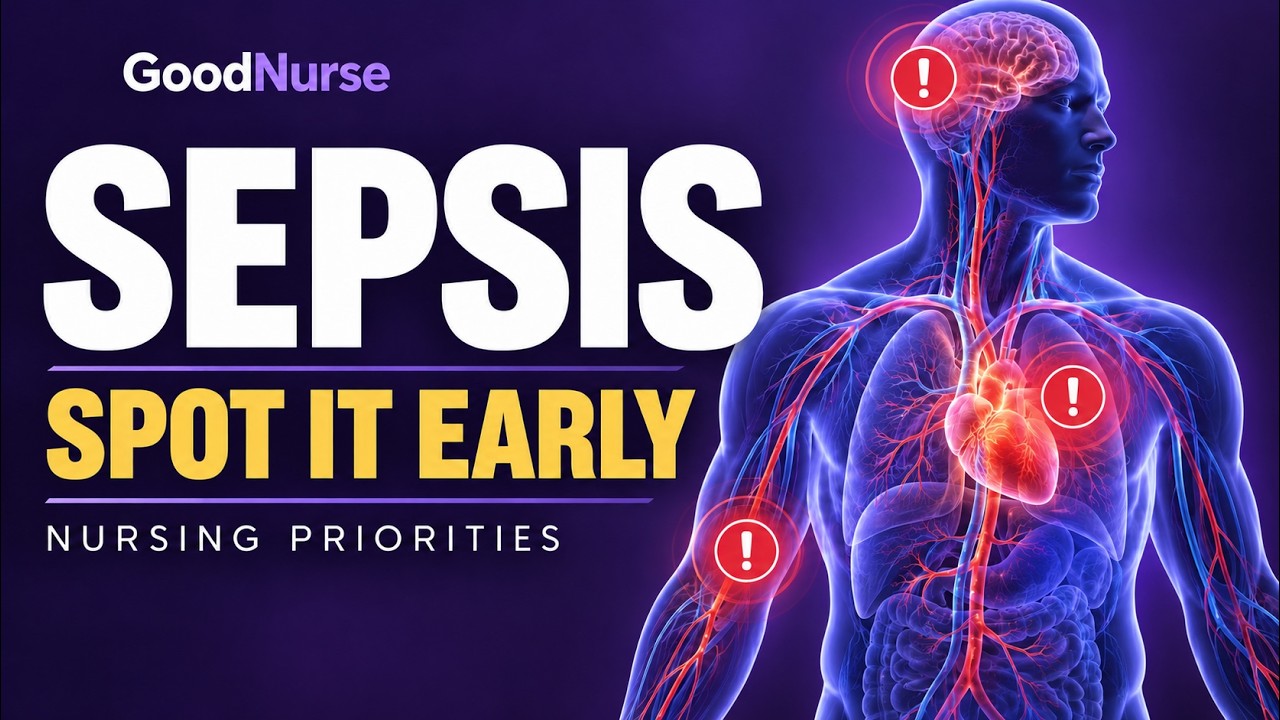
Adult Sepsis: Recognition, Escalation, and Nursing Priorities
Practice recognizing possible sepsis and organizing your response when an adult patient deteriorates. Clinical clarification (3:41–4:11): The three-hour window applies only to possible sepsis without shock; it is not a reason to delay indicated antibiotics. Perform rapid evaluation and give antimicrobials within three hours if infection concern persists. Shock or probable/definite sepsis calls for immediate treatment, ideally within one hour. The phrase “no exceptions” is too absolute: apply clinical judgment, patient-specific factors, and local protocols. In the recap case, the findings suggest possible shock and require immediate assessment; the brief scenario alone does not confirm shock. After watching, you should be able to identify concerning changes in mental status, breathing, circulation, and temperature; communicate findings promptly; explain the purpose and limitations of blood cultures and lactate; and describe nursing responsibilities during ordered antimicrobial therapy, fluid resuscitation, and reassessment. The lesson emphasizes clinical context, individualized care, and ongoing communication. Based on CDC resources and the 2026 Surviving Sepsis Campaign adult guidelines. This AI-assisted explainer uses synthetic narration. Apply what you learn within your scope of practice, facility protocols, provider orders, and supervised clinical training.

Receiving an Adult After Surgery: Handoff and Reassessment
Practice receiving a postoperative adult on an inpatient ward alongside the receiving RN. Connect the PACU handoff with the patient’s condition now, organize focused arrival checks within a complete assessment, and recognize changes that need prompt escalation. Use a fictional practice scenario, respectful patient communication and SBAR to report actual observations and request help. Urgent breathing or consciousness concerns interrupt a routine checklist; do not delay help to finish an assessment, score or handoff. Follow the individual orders, local monitoring and emergency pathways, and required supervision. This overview does not authorize independent transfer clearance, diagnosis, medication or equipment changes. AI-generated visuals and synthetic narration. Follow current clinician instructions and local policy.

Adult Pneumothorax: Recognition and Nursing Priorities
Build a focused approach to recognizing and reporting possible pneumothorax in an adult patient. Review pleural air and lung expansion, respiratory and circulatory changes, and why worsening physiology calls for prompt escalation. Practice prioritizing an urgent concern and organizing an SBAR request for bedside help. Learn how clinician-selected treatment and repeated assessment fit together, while keeping care within student scope, supervision, orders and local protocols. For nursing-student education. Includes a fictional scenario, AI-generated visuals and synthetic narration with source-based editorial review. This overview does not teach invasive procedures or replace supervised clinical skills training.

Adult Shock: Recognize Poor Perfusion and Escalate
Compare hypovolemic, cardiogenic, obstructive and distributive shock. In a fictional adult case, practice recognizing a concerning change in perfusion, calling for immediate help and giving a focused SBAR. The lesson connects bedside assessment to action within supervised nursing-student scope and your facility’s escalation pathway.