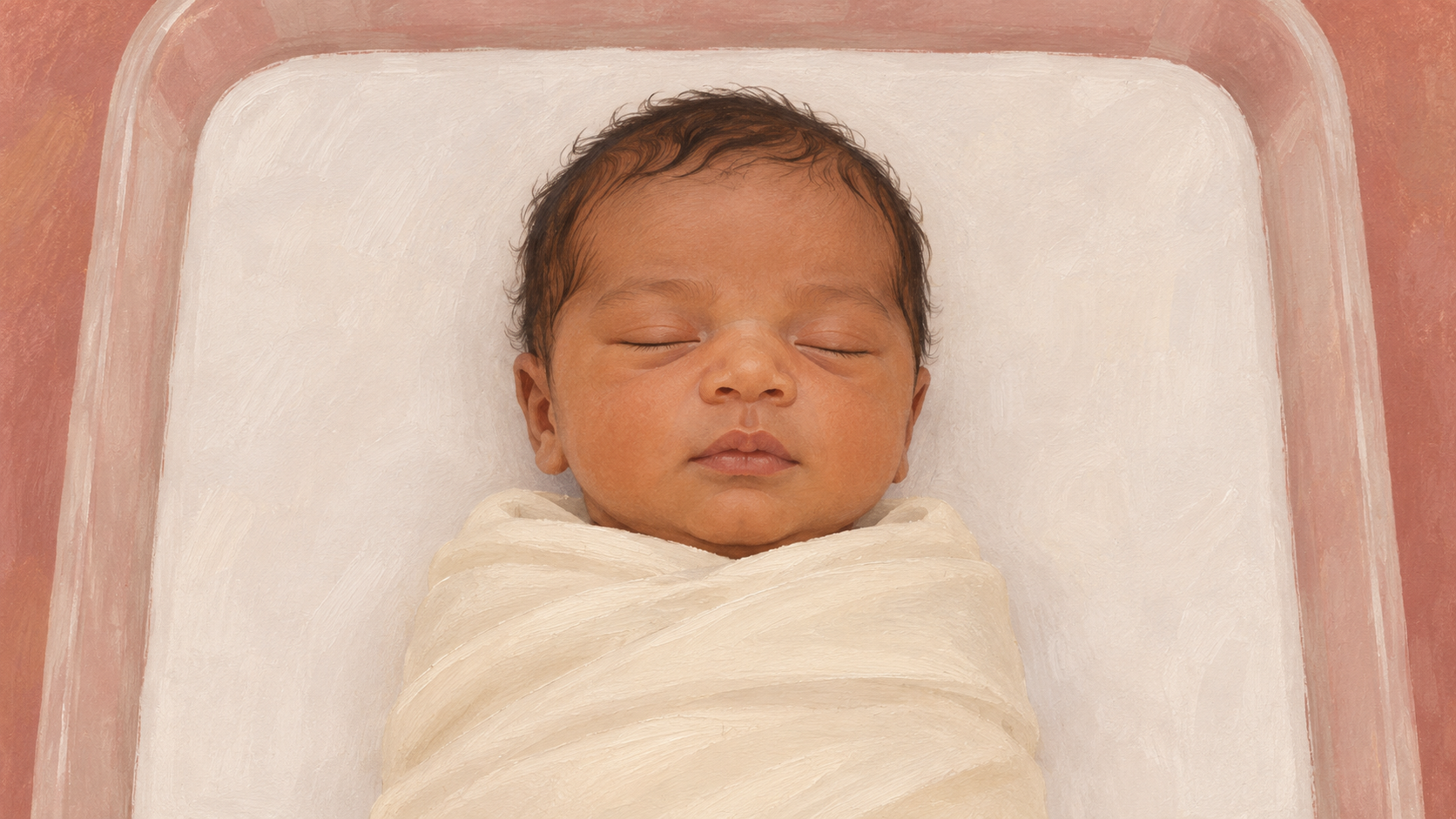


Newborn jaundice is yellowing caused by bilirubin building up in the blood. For nursing students, the key is to connect the baby's appearance with age in hours, gestational age, measured bilirubin and clinical condition. A yellow-looking baby does not tell you a bilirubin value, and a value without its timing is an incomplete report.
This guide explains assessment concepts for coursework and supervised clinical learning. A newborn with jaundice needs assessment by their care team; use the applicable neonatal guideline and your supervising clinician's direction for real care.
Why bilirubin rises after birth
Bilirubin forms as the body replaces old red blood cells. Before birth, the placenta helps remove it; after birth, the baby's liver takes over, and that transition is not immediately efficient. Bilirubin can accumulate and produce yellow skin or yellowing of the whites of the eyes. Premature babies are more likely to develop jaundice. These mechanisms are described in MedlinePlus's newborn jaundice overview.
A useful learning sequence is: production → processing → removal. Ask which part of that sequence might explain the information in a case. This is a way to organize your thinking, not a method for diagnosing the cause from appearance.
Many newborns have mild jaundice, but severe hyperbilirubinemia can injure the brain. Kernicterus is a serious form of bilirubin-related brain injury that can affect movement and hearing. The American Academy of Pediatrics hyperbilirubinemia resource explains why early recognition matters and identifies its guideline population as infants born at 35 or more weeks of gestation. Do not assume that guidance covers a more premature infant.
Why age in hours belongs beside the result
Compare these fictional handoff fragments:
- “The baby is jaundiced.”
- “The baby is 18 hours old, and yellowing was first noticed this morning.”
- “The bilirubin result was collected at 18 hours; here are the birth time, gestational age and assessment findings.”
Each version supplies more information that the receiving clinician can use. A calendar label such as “day two” is less precise than the actual time since birth.
Jaundice appearing during the first 24 hours needs prompt assessment and bilirubin measurement. The AAP also advises a bilirubin measurement before hospital discharge. See its Jaundice in Newborns explanation.
Avoid memorizing one number as a universal “safe bilirubin.” Interpretation and follow-up depend on the infant's age, measurement and risk context. The AAP guideline implementation FAQ explains that gestational age and additional neurotoxicity risk factors affect which treatment-threshold guidance applies. This article deliberately does not reproduce a treatment chart.
Appearance, screening and blood measurements answer different questions
Visual observation can identify possible jaundice. Examine in appropriate white light and recognize that yellowing may be harder to see in darker skin. Appearance alone does not quantify bilirubin. The AAP's parent guidance describes these visibility limitations.
Transcutaneous bilirubin, often abbreviated TcB, is an estimate obtained with a device against the skin. Total serum bilirubin, or TSB, is measured in blood. Skin readings that are high may require blood confirmation; the care team's guideline determines the testing pathway. MedlinePlus describes both methods.
For a classroom report, write the method beside the value. “Bilirubin checked” leaves the next reader wondering which test was done and when. Keep the units with the result as well; a bare number is poor communication.
What else should a student notice?
Build a short information checklist for your supervised assessment or case discussion:
- Birth time, gestational age and when yellowing was first noticed.
- Bilirubin test method, collection time, value, units and any previous results.
- Feeding effectiveness and changes in feeding behavior.
- Alertness, ability to wake and any change from the baby's usual behavior.
- Urine and stool observations, plus the documented follow-up plan.
This checklist is a study aid, not a replacement for a newborn assessment.
A jaundiced baby who is difficult to wake, is not feeding, has breathing difficulty, or becomes unusually floppy or stiff needs immediate medical assessment. Dark urine or pale stools also need prompt clinical attention. The NHS newborn jaundice guidance distinguishes these warning signs from uncomplicated yellowing. In a placement, alert your supervising nurse promptly and follow the local escalation process; outside a care setting, seek urgent medical help for an unwell newborn.
Feeding-related jaundice: avoid a common terminology trap
Early jaundice associated with inadequate milk intake and later breast milk jaundice are different concepts. MedlinePlus describes the first as occurring in the first week when feeding is not going well, while breast milk jaundice may appear later in an otherwise healthy breastfed infant. A label alone does not establish that a particular baby's jaundice is harmless. Source: MedlinePlus.
For a study case, describe what you actually know: “feeding poorly” is useful; “just breastfeeding jaundice” can prematurely close your reasoning. Feeding concerns call for assessment and support from the care team, rather than a student independently changing the feeding plan.
Phototherapy and follow-up: understand the purpose
Phototherapy uses special light to lower bilirubin. It is not ordinary room lighting, and putting a baby in sunlight is not a safe substitute. AAP parent guidance explains this distinction. Treatment selection and monitoring belong to the neonatal care team.
Discharge does not finish the assessment process. The AAP implementation FAQ emphasizes using the predischarge measurement to guide follow-up and communicating the relevant risk information to the clinician who will see the baby next. For a student, a strong final question is: “What follow-up has been arranged, and what should caregivers do if the baby changes?”
Practice explaining the difference
Try completing these statements in your own words:
- Yellow skin is an observation; a bilirubin result is a ______.
- “Age in hours” is useful because ______.
- A skin estimate and a serum result should be reported with ______.
- Poor feeding or difficulty waking changes the urgency because ______.
Suggested answers: a measurement; timing adds essential context; the test method, collection time and units; an unwell baby needs prompt assessment rather than reassurance from appearance alone.
For another newborn physiology topic, read the four mechanisms of newborn heat loss. To practice communicating an assessment, use the GoodNurse SBAR guide.
AI-assistance note: This article was written with AI assistance and checked against the linked sources. The cover is AI-generated. No human or clinical review is claimed.