

A negative pressure room helps keep potentially infectious air from escaping into the corridor: air moves from the adjacent space into the room because the room's pressure is lower. In health care, this is a central feature of an airborne infection isolation room (AIIR). It does not mean that the air is germ-free or that respiratory protection is unnecessary. CDC: environmental airflow
For nursing students, the useful connection is between a room's purpose, its airflow and the precautions people still need. This lesson explains those concepts; clinical placement and room operation follow facility policy, infection-prevention guidance and your instructor's supervision.
What does negative pressure actually mean?
“Negative” describes pressure relative to the neighboring space, not a vacuum. If the room is at lower pressure than the hall, the pressure difference favors inward airflow. That direction helps contain airborne contaminants within the isolation space. Positive pressure reverses the direction: air moves outward toward adjacent areas. CDC: pressure relationships
A useful learning question is: Which space is the airflow intended to protect? For airborne isolation, the goal is to reduce escape from the patient's room. For a protective environment, such as one designed for certain transplant patients, positive pressure helps reduce entry of airborne contaminants. These room types serve different purposes; neither label means “better isolation” for every situation. CDC: isolation and protective environments
Pressure, ventilation and filtration do different jobs
Do not collapse these three ideas into one:
| Feature | Question it answers | Learning point |
|---|---|---|
| Pressure relationship | Which way does air tend to move between spaces? | Negative pressure supports inward airflow. |
| Ventilation rate | How much room air is exchanged over time? | Air changes per hour describe a rate, not a direction. |
| Filtration | What particles are removed from air passing through a filter? | Cleaning recirculated air does not by itself prove containment. |
CDC's TB infection-control framework separates administrative measures, environmental controls and respiratory protection. Ventilation dilutes and removes contaminated air; airflow control helps protect neighboring spaces; filtration can clean air passing through the system. These measures work together. CDC: TB infection-control framework
For context, CDC's isolation recommendations specify at least six air changes per hour for existing facilities and 12 for new construction or renovation. They also address outside exhaust or HEPA filtration when air must be returned to the ventilation system or adjacent spaces. These are guideline distinctions, not a student checklist for certifying a room; applicable facility requirements need professional verification. CDC: AIIR recommendations
Why the door matters
An AIIR's closed door is part of its intended operating condition. CDC recommends keeping it closed except when needed for entry or exit and checking pressure daily while the room is used for Airborne Precautions. A door that looks closed does not establish that the ventilation is functioning correctly. CDC: room operation and monitoring
For a student arriving on a new unit, useful questions include: Where is the approved room-status indicator? Who verifies it? What is the escalation process if its status is unclear? Ask your supervising nurse rather than experimenting with ventilation controls, improvising a smoke test or treating a photograph of a closed door as proof of room performance.
Negative pressure does not replace a respirator
Airborne Precautions add to Standard Precautions. CDC lists tuberculosis, measles and chickenpox among infections requiring airborne measures and describes appropriate AIIR placement and respiratory protection. The exact precautions depend on the infection and circumstances. CDC: Transmission-Based Precautions
For presumed or confirmed infectious pulmonary TB, room engineering and personal respiratory protection address different parts of the exposure problem. CDC includes training and fit testing in respiratory-protection programs. Minnesota's airborne guidance also distinguishes prior fit testing from a seal check before each use. Knowing a room is negative pressure does not answer whether your respirator is suitable or correctly fitted. CDC: respiratory protection, Minnesota Department of Health: airborne precautions
Three common misunderstandings
“Any private room is an AIIR.” A private room with a closed door is not automatically a verified negative pressure room. Minnesota's guidance distinguishes temporary placement when an AIIR is unavailable from transfer to a facility with appropriate infection-control capacity. Minnesota: room placement
“A portable HEPA cleaner makes the room negative pressure.” Recirculating air through a filter does not establish inward airflow. CDC distinguishes ordinary recirculating units from systems specifically designed to exhaust air outside and achieve negative pressure. A device's filter label alone cannot tell you which function it provides. CDC: TB environmental controls
“A normal-looking room means Airborne Precautions are unnecessary.” CDC applies airborne measures to known or suspected infections transmitted by that route. Room appearance alone cannot determine the patient's required precautions. CDC: Airborne Precautions
Surface processing is another separate concept. For that distinction, see cleaning, disinfection and sterilization.
Check your understanding
These fictional learning checks are original examples, not official NCLEX questions or patient-care instructions.
- A room has frequent air exchange, but its pressure relationship is unknown. Can you call it negative pressure? No. A ventilation rate does not establish airflow direction between spaces.
- A classmate says a filter replaces the room's containment function. What distinction is missing? Filtering air and controlling its movement are different jobs.
- You see an unfamiliar room-status display during placement. What information is missing? The local meaning of the indicator, confirmation of room status and the approved escalation pathway. Ask the supervising team before drawing a conclusion.
When explaining this topic aloud, connect each feature to its purpose: airflow direction, air exchange, filtration and personal protection. If you can explain why each remains necessary, you understand more than a room-label mnemonic.
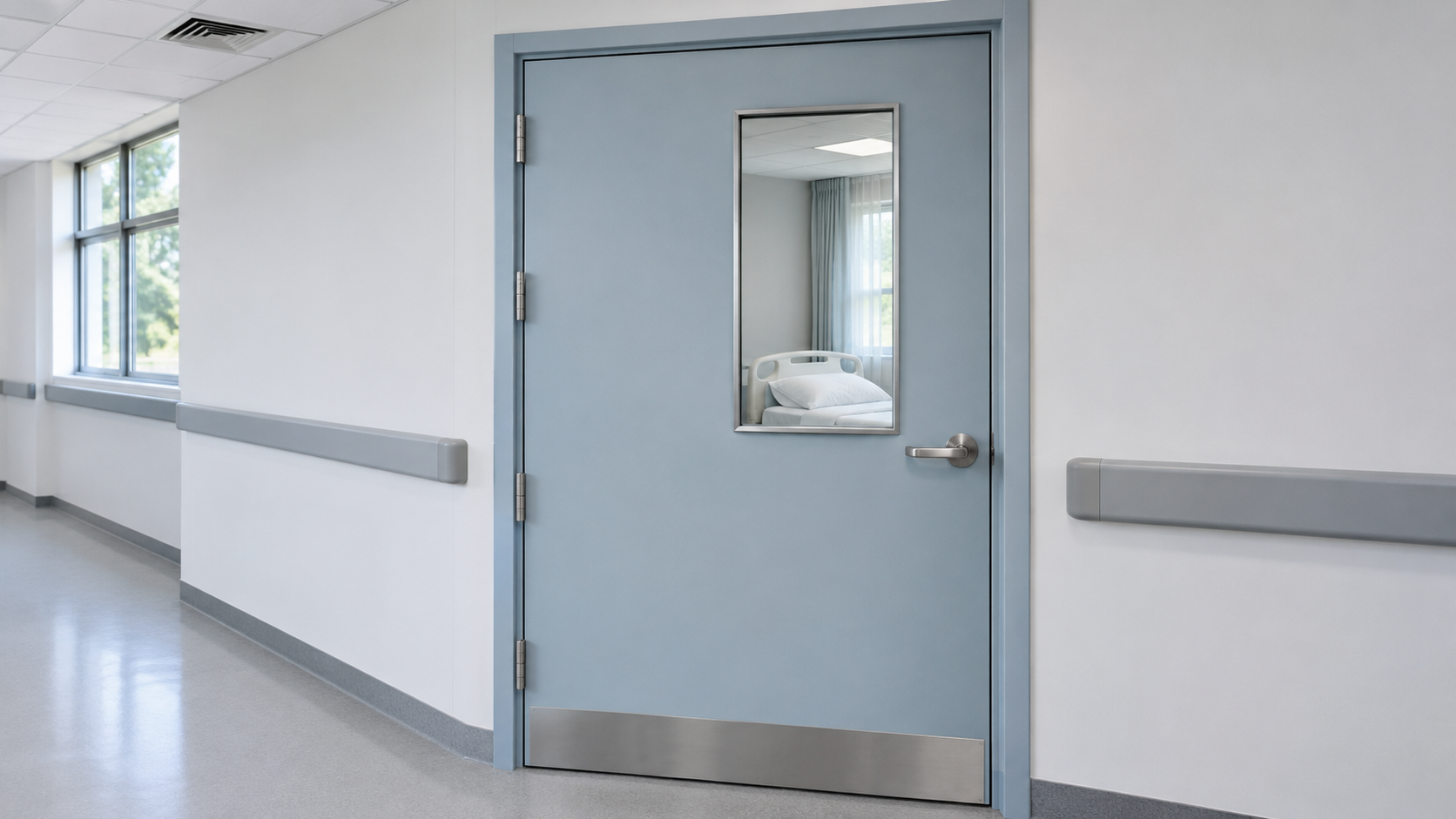
AI-assistance note: This article was written with AI assistance, and its cover is AI-generated. The cover is an illustrative hospital environment, not an engineering diagram or verification of a functioning isolation room. No human clinical review is claimed.