Medical-Surgical Nursing Videos
Browse videos in the Medical-Surgical Nursing category.

Adult Osteoarthritis: Pain, Function and Supported Activity
Connect established adult knee osteoarthritis with assessed pain, stiffness and meaningful daily function. Practice using PAIN / FUNCTION / CHANGE to compare current symptoms with baseline, support the individualized clinician/PT plan alongside the supervising RN, and communicate observations and response. Work through a fictional daily-activity goal, respectful teach-back and a changed-symptom scenario. Recognize a newly hot swollen joint, sudden severe pain or major loss of movement as concerns needing prompt assessment rather than an assumed OA flare; fever may be absent. Follow current local pathways, orders, assistance and RN/preceptor guidance. This original study organizer is not a validated or complete clinical protocol, exercise prescription or competency assessment.

Choosing PPE for the Task and Anticipated Exposure
Practice connecting a planned adult-care task with anticipated exposure of the hands, skin/clothing and eyes, nose and mouth. Use TASK / EXPOSURE / PLAN to explain appropriate PPE, hand hygiene and equipment needs while preserving required Transmission-Based Precautions and current facility policies. Compare two qualified fictional scenarios, work through a soiled-to-clean-task practice question, and rehearse a respectful patient explanation and supervised plan. Follow RN/preceptor guidance and local training. This study organizer is not a validated clinical protocol or a substitute for procedural and PPE competency assessment.
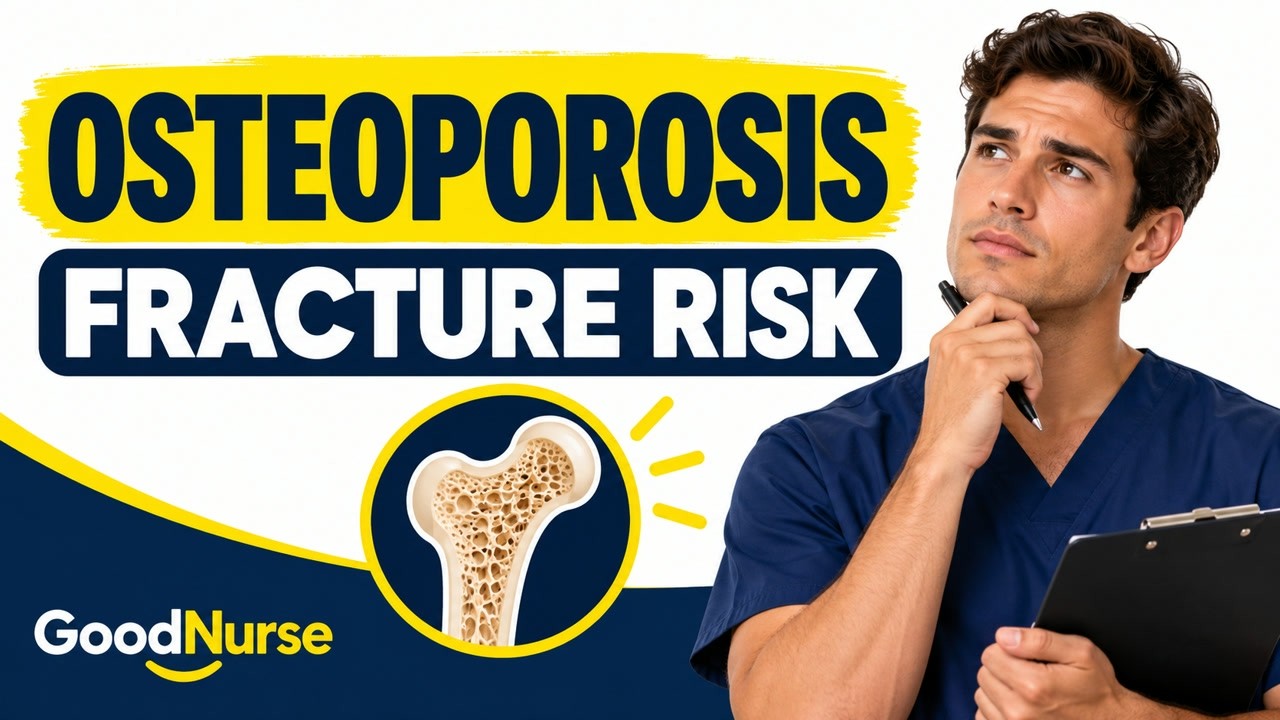
Adult Osteoporosis: Fracture Risk, Assessment and Patient Teaching
Connect osteoporosis-related bone fragility with focused nursing assessment and patient teaching. Review relevant history, changes in pain and function, and why a routine bone-density screening plan must not delay evaluation of new symptoms. Apply the lesson to a fictional adult scenario. Practice reporting concerns to the supervising RN, recognizing selected urgent and emergency warning features, and supporting an individualized plan for activity, nutrition, treatment and fall prevention. Use respectful teach-back to check how clearly the plan was explained. This study overview supports supervised learning. Follow individual orders and local policy; it does not certify competency or authorize independent diagnosis, medication changes or exercise prescriptions. AI-generated visuals and synthetic narration.

Adult Urinary Retention: Recognition, Assessment and Reporting
Recognize possible incomplete bladder emptying in an adult patient. Review why passing small amounts or leaking urine does not prove the bladder emptied, connect symptoms with relevant history, and understand the purpose of postvoid residual assessment. Apply a fictional nursing-student scenario and practice reporting actual findings alongside your supervising RN. Sudden inability to urinate or severe abdominal pain needs immediate medical evaluation; do not delay help to finish a history, scan or report. Follow individual orders, required supervision and local escalation pathways. This overview does not authorize independent diagnosis, catheter procedures, fluid prescriptions or medication changes. AI-generated visuals and synthetic narration. Follow current clinician instructions and local policy.

Receiving an Adult After Surgery: Handoff and Reassessment
Practice receiving a postoperative adult on an inpatient ward alongside the receiving RN. Connect the PACU handoff with the patient’s condition now, organize focused arrival checks within a complete assessment, and recognize changes that need prompt escalation. Use a fictional practice scenario, respectful patient communication and SBAR to report actual observations and request help. Urgent breathing or consciousness concerns interrupt a routine checklist; do not delay help to finish an assessment, score or handoff. Follow the individual orders, local monitoring and emergency pathways, and required supervision. This overview does not authorize independent transfer clearance, diagnosis, medication or equipment changes. AI-generated visuals and synthetic narration. Follow current clinician instructions and local policy.

Adult Cane and Crutch Safety: Plan, Fit and Teach
Learn a practical approach to preparing an adult patient to use a prescribed cane or axillary crutches. Review the current mobility plan, check basic fit and equipment condition, identify hazards, and use respectful teach-back with supervised return demonstration. Includes a nursing-student practice scenario and priorities for pausing safely and reporting concerns to your RN, preceptor or physical therapist. Individual weight-bearing orders, assistance requirements and precautions govern; this overview does not teach gait, transfer or stair sequences or certify independent mobility. AI-generated visuals and synthetic narration. Follow current clinician instructions and local policy.

Adult Pneumothorax: Recognition and Nursing Priorities
Build a focused approach to recognizing and reporting possible pneumothorax in an adult patient. Review pleural air and lung expansion, respiratory and circulatory changes, and why worsening physiology calls for prompt escalation. Practice prioritizing an urgent concern and organizing an SBAR request for bedside help. Learn how clinician-selected treatment and repeated assessment fit together, while keeping care within student scope, supervision, orders and local protocols. For nursing-student education. Includes a fictional scenario, AI-generated visuals and synthetic narration with source-based editorial review. This overview does not teach invasive procedures or replace supervised clinical skills training.

Adult Head-to-Toe Assessment: An Organized Bedside Framework
Build a consistent, flexible framework for an adult bedside assessment. Connect the general survey with neuro/head-neck, cardiopulmonary, abdominal and elimination, extremity and mobility, and skin/device findings. Compare observations with baseline, respect privacy and communication needs, and recognize when urgent concerns should interrupt the routine sequence. Review hand hygiene, abdominal assessment ordering, documentation of findings actually obtained, and SBAR communication with your RN/preceptor and clinical team. A fictional case supports nursing judgment in supervised practice. This is a study overview, not a complete skills demonstration or competency validation. Follow current school/facility competencies and local procedures. Based on Open RN/WisTech Open Nursing Skills 2e (2023), CDC hand-hygiene guidance (2024), and AHRQ TeamSTEPPS SBAR (page reviewed November 2019). Includes AI-generated visuals and synthetic narration; no qualified clinician review or source-organization endorsement is claimed.

Adult Rhabdomyolysis: Recognition and Nursing Priorities
Learn to recognize possible adult rhabdomyolysis without waiting for dark urine. Distinguish CK, creatinine and myoglobin, and connect muscle breakdown with kidney and potassium-related risks. Use a fictional case to practice assessment, prompt communication and escalation, ordered laboratory and cardiac monitoring, and reassessment of prescribed IV fluids. Includes urgent compartment-syndrome warning signs and the importance of monitoring fluid tolerance. For nursing study and supervised practice with your RN/preceptor, current orders and local protocols. Based on CDC/NIOSH resources and the 2022 AAST consensus. Includes AI-generated visuals and synthetic narration; source-based editorial review does not constitute qualified clinician review.

Adult Vital Signs: Accurate Measurement, Trends, and Escalation
Practice interpreting adult vital signs as part of a patient assessment. Review practical measurement checks for temperature, pulse, respirations, blood pressure, and oxygen saturation, then connect findings with symptoms, baseline, and trends. A short case helps you reason through a reassuring monitor reading alongside concerning clinical changes. Use this lesson to prepare for supervised clinical practice and nursing assessment questions. Work with your RN/preceptor, follow current orders and facility procedures, and seek urgent help promptly when a patient deteriorates. Educational content with AI-generated visuals and synthetic narration.
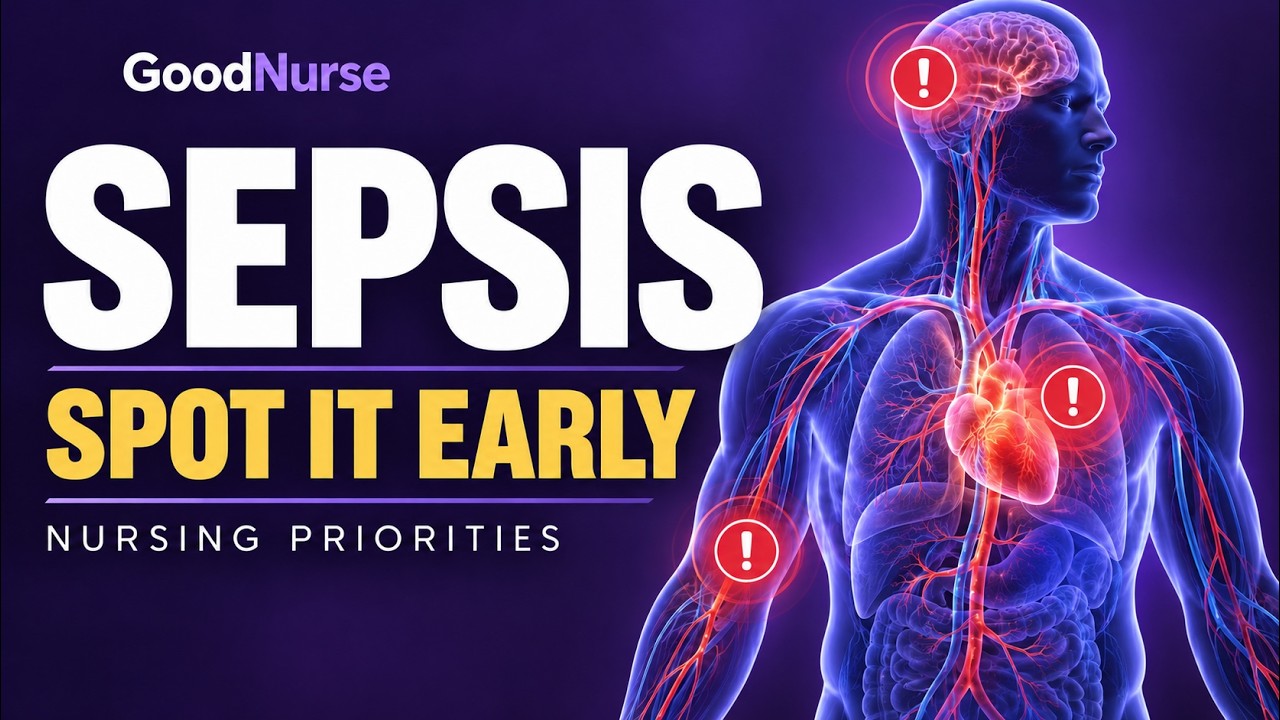
Adult Sepsis: Recognition, Escalation, and Nursing Priorities
Practice recognizing possible sepsis and organizing your response when an adult patient deteriorates. Clinical clarification (3:41–4:11): The three-hour window applies only to possible sepsis without shock; it is not a reason to delay indicated antibiotics. Perform rapid evaluation and give antimicrobials within three hours if infection concern persists. Shock or probable/definite sepsis calls for immediate treatment, ideally within one hour. The phrase “no exceptions” is too absolute: apply clinical judgment, patient-specific factors, and local protocols. In the recap case, the findings suggest possible shock and require immediate assessment; the brief scenario alone does not confirm shock. After watching, you should be able to identify concerning changes in mental status, breathing, circulation, and temperature; communicate findings promptly; explain the purpose and limitations of blood cultures and lactate; and describe nursing responsibilities during ordered antimicrobial therapy, fluid resuscitation, and reassessment. The lesson emphasizes clinical context, individualized care, and ongoing communication. Based on CDC resources and the 2026 Surviving Sepsis Campaign adult guidelines. This AI-assisted explainer uses synthetic narration. Apply what you learn within your scope of practice, facility protocols, provider orders, and supervised clinical training.

Blood Transfusions: Compatibility, Administration & Reaction Management
A focused review of blood transfusion nursing care, covering blood type compatibility, pre-transfusion verification, infusion time limits, IV fluid compatibility, and how to recognize and respond to febrile, allergic, and hemolytic reactions, as well as TACO and TRALI. Includes step-by-step priority actions for managing a suspected transfusion reaction.