Fundamentals Videos
Browse videos in the Fundamentals category.

Reported Penicillin Reaction: History, Uncertainty and Team Review
Practice gathering a focused adult penicillin-reaction history using what happened, when, and what followed. Ask about actual symptoms, timing relative to doses, treatment and outcome, and later antibiotic exposure. Preserve unknowns and distinguish the patient report from verified details in a clear handoff to the supervising RN for clinician/pharmacist review. Apply the history questions to a fictional stable-patient scenario, then contrast a new emergency concern. Current airway, breathing or circulation compromise takes priority over an interview or documentation and may occur without a rash. Follow RN/preceptor guidance and current local protocols. These original study cues are not a validated risk score; the lesson does not authorize independent allergy classification, label removal, drug clearance, challenge testing or medication changes.

Adult Osteoarthritis: Pain, Function and Supported Activity
Connect established adult knee osteoarthritis with assessed pain, stiffness and meaningful daily function. Practice using PAIN / FUNCTION / CHANGE to compare current symptoms with baseline, support the individualized clinician/PT plan alongside the supervising RN, and communicate observations and response. Work through a fictional daily-activity goal, respectful teach-back and a changed-symptom scenario. Recognize a newly hot swollen joint, sudden severe pain or major loss of movement as concerns needing prompt assessment rather than an assumed OA flare; fever may be absent. Follow current local pathways, orders, assistance and RN/preceptor guidance. This original study organizer is not a validated or complete clinical protocol, exercise prescription or competency assessment.

Choosing PPE for the Task and Anticipated Exposure
Practice connecting a planned adult-care task with anticipated exposure of the hands, skin/clothing and eyes, nose and mouth. Use TASK / EXPOSURE / PLAN to explain appropriate PPE, hand hygiene and equipment needs while preserving required Transmission-Based Precautions and current facility policies. Compare two qualified fictional scenarios, work through a soiled-to-clean-task practice question, and rehearse a respectful patient explanation and supervised plan. Follow RN/preceptor guidance and local training. This study organizer is not a validated clinical protocol or a substitute for procedural and PPE competency assessment.

Vitamins and Supplements: Ask, Verify and Share the Medication History
Practice gathering a complete adult medication history that includes vitamins, minerals, herbs and other supplements. Use the ASK / VERIFY / SHARE study organizer to distinguish product identity, amount actually used and frequency; check available labels; and communicate uncertainty honestly to the supervising RN for clinician/pharmacist review. Work through a fictional case and a focused handoff, connect supplement use with medication-safety concerns, and support the patient with respectful questions and teach-back. Follow local policies and RN/preceptor supervision. This lesson does not recommend supplement doses or authorize independent treatment changes.
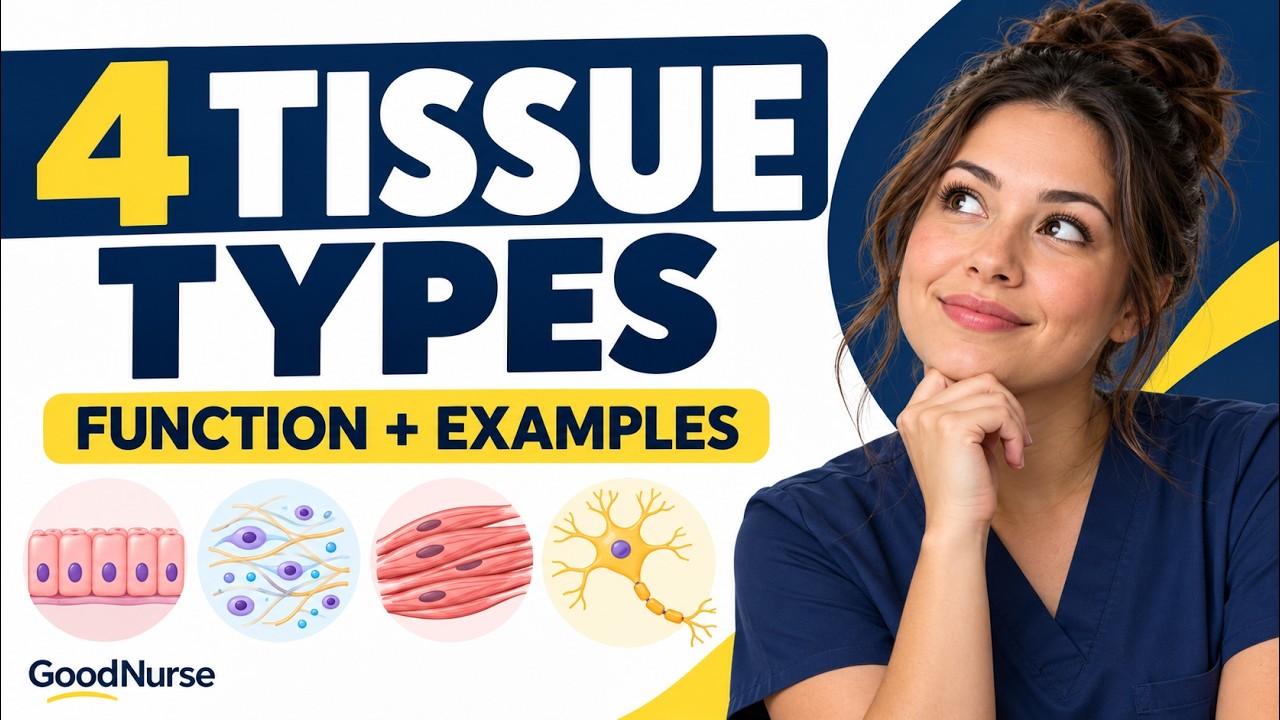
Four Tissue Types: Structure, Function and Nursing Connections
Connect epithelial, connective, muscle and nervous tissues with their structure, main functions and familiar examples. Review cells, tissues and organs, compare the three muscle types, and use a conceptual stomach map and retrieval questions to see how different tissues work together. This foundation lesson supports nursing anatomy study and supervised learning; it does not diagnose symptoms or replace your course, supervising RN/preceptor or local policy.
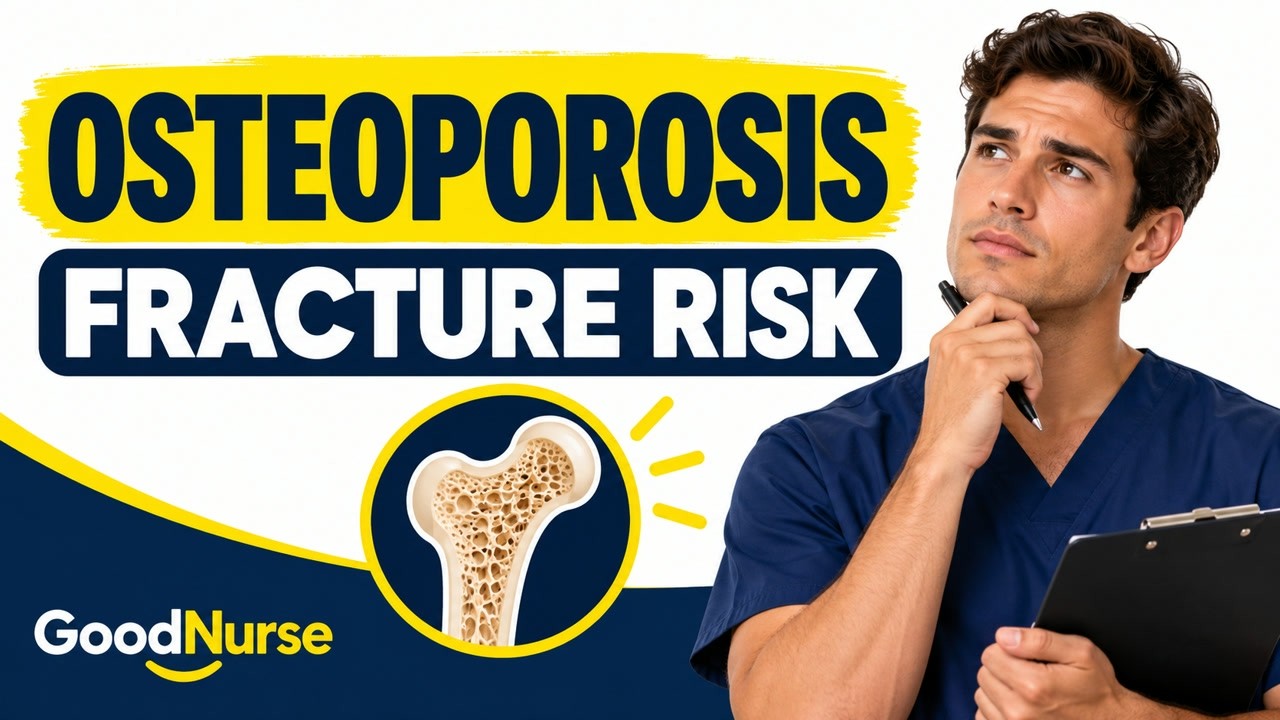
Adult Osteoporosis: Fracture Risk, Assessment and Patient Teaching
Connect osteoporosis-related bone fragility with focused nursing assessment and patient teaching. Review relevant history, changes in pain and function, and why a routine bone-density screening plan must not delay evaluation of new symptoms. Apply the lesson to a fictional adult scenario. Practice reporting concerns to the supervising RN, recognizing selected urgent and emergency warning features, and supporting an individualized plan for activity, nutrition, treatment and fall prevention. Use respectful teach-back to check how clearly the plan was explained. This study overview supports supervised learning. Follow individual orders and local policy; it does not certify competency or authorize independent diagnosis, medication changes or exercise prescriptions. AI-generated visuals and synthetic narration.

Adult Eye-Drop Technique: Verification, Tip Protection and Patient Teaching
Practice a focused approach to routine prescribed eye drops for a stable adult. Connect medication and order verification with assessment, protection of the dropper tip, the lower-lid conjunctival pocket and respectful patient teaching. Use a fictional scenario to identify contamination concerns, clarify the exact product instructions with the supervising RN/preceptor, and check understanding through teach-back and return demonstration. Reassess tolerance, document actual care and report concerns. New pain, discharge or vision changes while using drops needs prompt clinical advice. This study overview supports supervised skills learning. Follow individual orders, product instructions and local policy; it does not certify competency or authorize independent medication decisions. AI-generated visuals and synthetic narration.

Adult Urinary Retention: Recognition, Assessment and Reporting
Recognize possible incomplete bladder emptying in an adult patient. Review why passing small amounts or leaking urine does not prove the bladder emptied, connect symptoms with relevant history, and understand the purpose of postvoid residual assessment. Apply a fictional nursing-student scenario and practice reporting actual findings alongside your supervising RN. Sudden inability to urinate or severe abdominal pain needs immediate medical evaluation; do not delay help to finish a history, scan or report. Follow individual orders, required supervision and local escalation pathways. This overview does not authorize independent diagnosis, catheter procedures, fluid prescriptions or medication changes. AI-generated visuals and synthetic narration. Follow current clinician instructions and local policy.
Receiving an Adult After Surgery: Handoff and Reassessment
Practice receiving a postoperative adult on an inpatient ward alongside the receiving RN. Connect the PACU handoff with the patient’s condition now, organize focused arrival checks within a complete assessment, and recognize changes that need prompt escalation. Use a fictional practice scenario, respectful patient communication and SBAR to report actual observations and request help. Urgent breathing or consciousness concerns interrupt a routine checklist; do not delay help to finish an assessment, score or handoff. Follow the individual orders, local monitoring and emergency pathways, and required supervision. This overview does not authorize independent transfer clearance, diagnosis, medication or equipment changes. AI-generated visuals and synthetic narration. Follow current clinician instructions and local policy.

Adult Cane and Crutch Safety: Plan, Fit and Teach
Learn a practical approach to preparing an adult patient to use a prescribed cane or axillary crutches. Review the current mobility plan, check basic fit and equipment condition, identify hazards, and use respectful teach-back with supervised return demonstration. Includes a nursing-student practice scenario and priorities for pausing safely and reporting concerns to your RN, preceptor or physical therapist. Individual weight-bearing orders, assistance requirements and precautions govern; this overview does not teach gait, transfer or stair sequences or certify independent mobility. AI-generated visuals and synthetic narration. Follow current clinician instructions and local policy.
After Discharge: Recognizing Urgent Maternal Warning Signs
Practice recognizing and reporting urgent concerns after pregnancy and birth. This focused nursing-student lesson follows a fictional patient who returns after discharge with concerning symptoms. Connect recent pregnancy history, respectful listening and selected maternal warning signs with prompt communication and the appropriate urgent or emergency response. Review a concise handoff and patient teaching about when and where to seek care. Some pregnancy-related complications can occur during the year after delivery; timing differs by condition. Warning examples are not an exhaustive checklist or a diagnosis. Work within student supervision and current orders and local protocols, and do not delay urgent care for a routine appointment or assessment checklist. AI-generated visuals and synthetic narration, reviewed against public CDC HEAR HER and Alliance for Innovation on Maternal Health educational resources. This is a study overview, not individual treatment advice or competency validation. No qualified clinician review or source-organization endorsement is claimed.

Adult MDI Technique: Assessment, Spacer Use and Patient Teaching
Practice a focused nursing-student approach to adult metered-dose inhaler (MDI) teaching. This lesson follows a stable adult using a prescribed manually actuated MDI with a compatible mouthpiece valved holding chamber. Review breathing first, verify the actual medicine and device instructions, recognize common technique errors, and use a respectful return demonstration. Learn why one puff at a time, a slow inhalation and device-specific preparation matter, and when breathing difficulty calls for urgent escalation instead of routine teaching. An introductory educational overview for supervised study—not a competency assessment or individual treatment plan. Follow the prescription, manufacturer instructions and local protocols. AI-generated visuals and synthetic narration; reviewed against public NHLBI, American Thoracic Society and American Lung Association educational sources. No qualified clinician review is claimed.