

If you’re reading this on your phone during a break, or reviewing notes between shifts, we see you.
You are part of the “double shift” crew - nursing graduates balancing work, family, and real-life responsibilities while preparing for the Next Generation NCLEX (NGN).
Some students can study 8 hours per day.
You probably can’t.
Here’s the truth:
You do not need 40 hours per week to pass.
You need a structured strategy.
This guide outlines a realistic 4-week NCLEX study plan for working students that prioritizes:
- High-yield content
- NGN clinical judgment strategy
- Smart time blocking
- Burnout prevention
- CAT exam readiness
Before starting, make sure you understand how the exam is structured under the updated blueprint:
👉 Review the 2026 NCLEX-RN & PN Test Plan Breakdown
👉 Start an NGN practice session inside GoodNurse.
Can You Really Pass the NCLEX in 4 Weeks While Working?
Yes.
The NCLEX measures minimum competency, not perfection.
To succeed in 30 days while working, shift your mindset:
Stop trying to memorize everything.
Start mastering safety and clinical reasoning.
This schedule assumes:
- 1–2 hours on workdays
- 4–5 hours on off days
- Consistency over intensity
If you need a broader overview first, review the Complete NCLEX Study Mega Guide (2026 Edition) before diving into this 4-week plan.
Essential Prep: Your NGN Toolkit
Because your time is limited, you cannot afford inefficient studying.
Choosing the Right QBank
Your QBank is your primary tool.
For a 4-week plan:
- Stick to ONE QBank
- Use CAT mode
- Focus on rationales
Avoid resource overload.
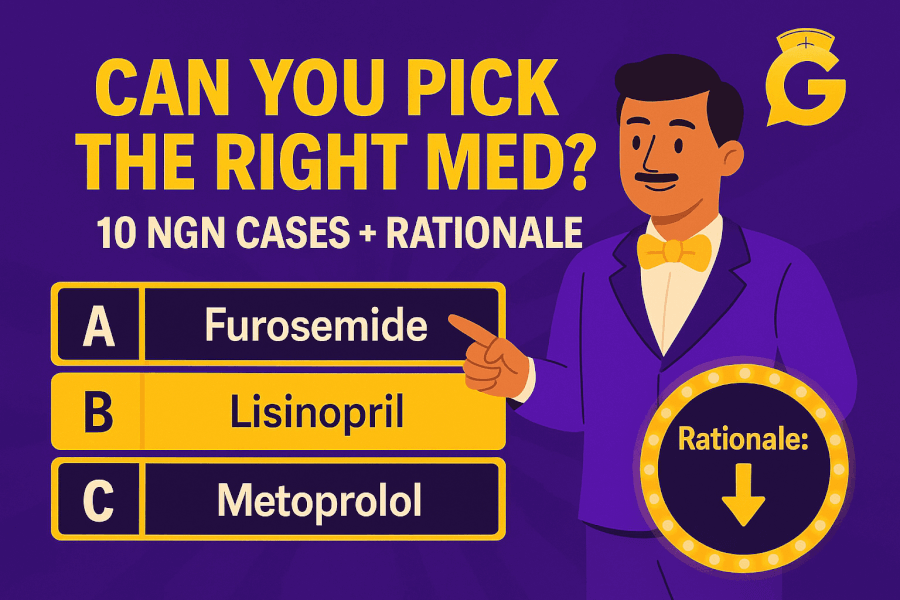
If you're unsure how NGN questions are structured, review:
These formats make up a significant portion of NGN case-based questions.
Understand NGN Partial Credit
Working students often over-select answers under pressure.
Review how the NGN partial credit scoring system works in:
👉 Decoding the NGN Scoring System (How Partial Credit Works)
Understanding plus-minus scoring alone can protect critical points.
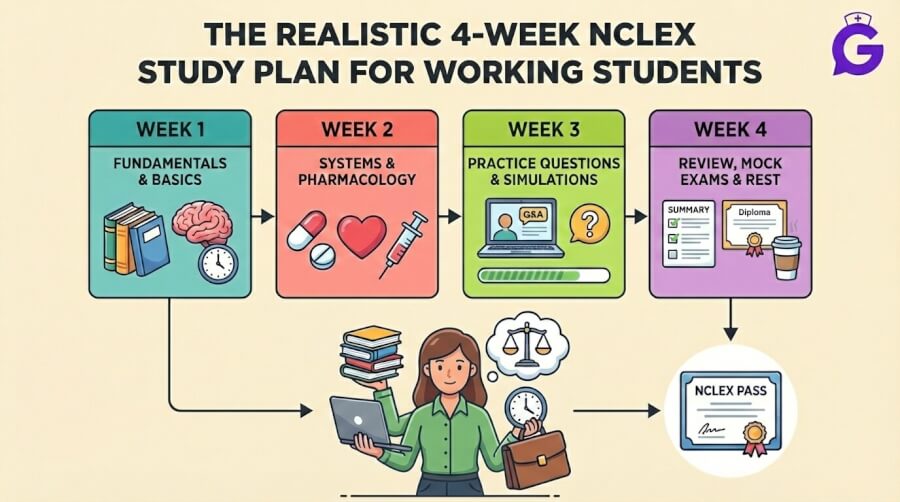
The 4-Week NCLEX Study Schedule
Week 1: Foundations & Safety
Goal: Build your safety base.
Focus Areas:
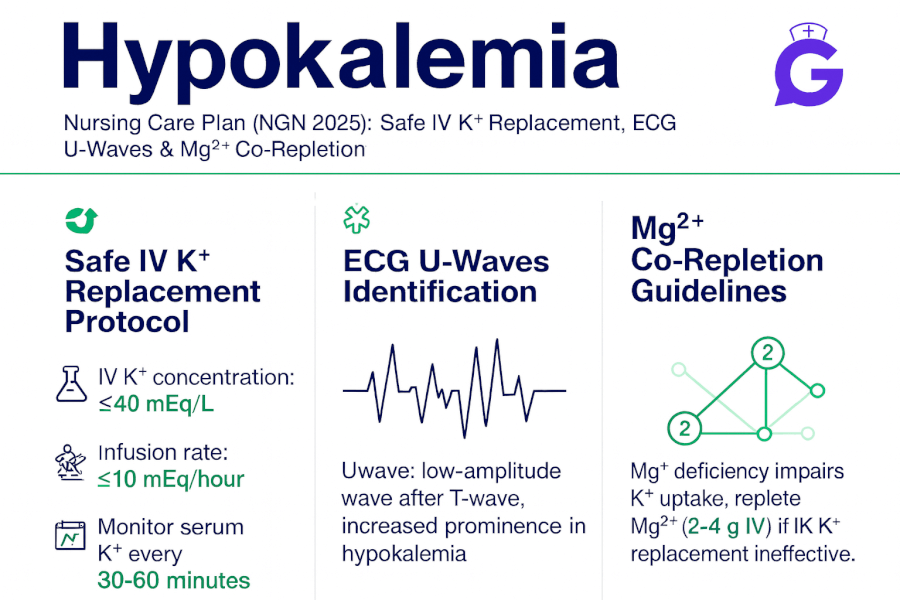
- Fluid & Electrolytes
- Acid-Base Imbalance
- Infection Control & PPE
- Basic Care & Comfort
Why this matters:
Safety questions are everywhere in NGN case studies.
If you work in a hospital:
Quiz yourself on isolation precautions every time you pass a patient room.
Use structured prompts from the AI Prompt Library for Nursing Students to reinforce reasoning chains quickly.
Week 2: Pharmacology & Physiological Integrity
Goal: Conquer high-risk content.
Focus Areas:
- Cardiac disorders
- Respiratory conditions
- Endocrine emergencies
- High-alert medications (Insulin, Heparin, Digoxin)
Strategy:
Do not memorize every side effect.
Focus on:
- Life-threatening adverse reactions
- Priority interventions
- Safety monitoring
Practice NGN-style pharmacology in:
👉 NGN Pharmacology Case Studies (2025 Edition)
Week 3: Special Populations & Management of Care
Goal: Cover high-risk, high-yield domains.
Focus Areas:
- OB & Maternal-Newborn
- Pediatrics
- Mental Health
- Prioritization & Delegation
Prioritization makes up a large percentage of the exam.
Review:
- Delegation rules
- LPN vs UAP scope
- Safety hierarchy
The NGN heavily tests layered reasoning within case studies.
Reinforce this using:
👉 How to Read NGN Case Stems (Clinical Judgment Strategy)
Week 4: CAT Exams & Readiness
Goal: Build stamina and fix weak areas.
Tasks:
- Take 3–4 full-length CAT exams
- Review low-performance categories
- Revisit weak content
- Practice NGN case sets
Now is the time to:
- Confirm ATT status
- Review NCLEX Registration Guide (Pearson VUE Process Explained)
- Double-check test center logistics
Simulation reduces anxiety.
Full-length CAT exams train mental stamina. Many working students struggle not with content—but fatigue.
Time-Blocking Strategies for Busy Students
The Commute Review
Use audio reinforcement for:
- Isolation precautions
- Developmental milestones
- Pharmacology safety alerts
Passive listening reinforces active study.
The 15-Minute Break Drill
During lunch breaks:
- Eat for 15 minutes
- Complete 10 NGN questions in 15 minutes
Over 3 shifts per week, that’s 30–40 extra questions.
Small chunks compound.
The 2-Hour Deep Work Block
On off-days:
- Two 2-hour blocks
- Phone away
- Timed focus
You will retain more in 4 focused hours than 8 distracted ones.
3 Common Mistakes Working Students Make
1. Overstudying After a 12-Hour Shift
Your brain is fried.
If exhausted, review flashcards or rationales instead of grinding 75 questions.
Rest is a strategy.
2. Ignoring Rationales
This is the biggest mistake.
You must read the rationale—even if you guessed correctly.
Understanding why builds confidence and reduces anxiety.
3. Neglecting Self-Care
Sleep, hydration, and food are cognitive fuel.
Burning out in Week 3 destroys retention in Week 4.
Final Encouragement: From Working Student to RN
Balancing work and NCLEX prep is difficult.
But it builds the exact skills nursing requires:
- Prioritization
- Time management
- Emotional regulation
- Clinical reasoning under pressure
Stick to the plan.
Trust your training.
You are closer than you think.
Start building confidence inside GoodNurse.
References
- National Council of State Boards of Nursing (NCSBN). NCLEX-RN Test Plan & NGN Item Types. https://www.ncsbn.org
- American Nurses Association (ANA). Scope and Standards of Practice. https://www.nursingworld.org
- Pearson VUE. NCLEX Registration Information. https://www.pearsonvue.com